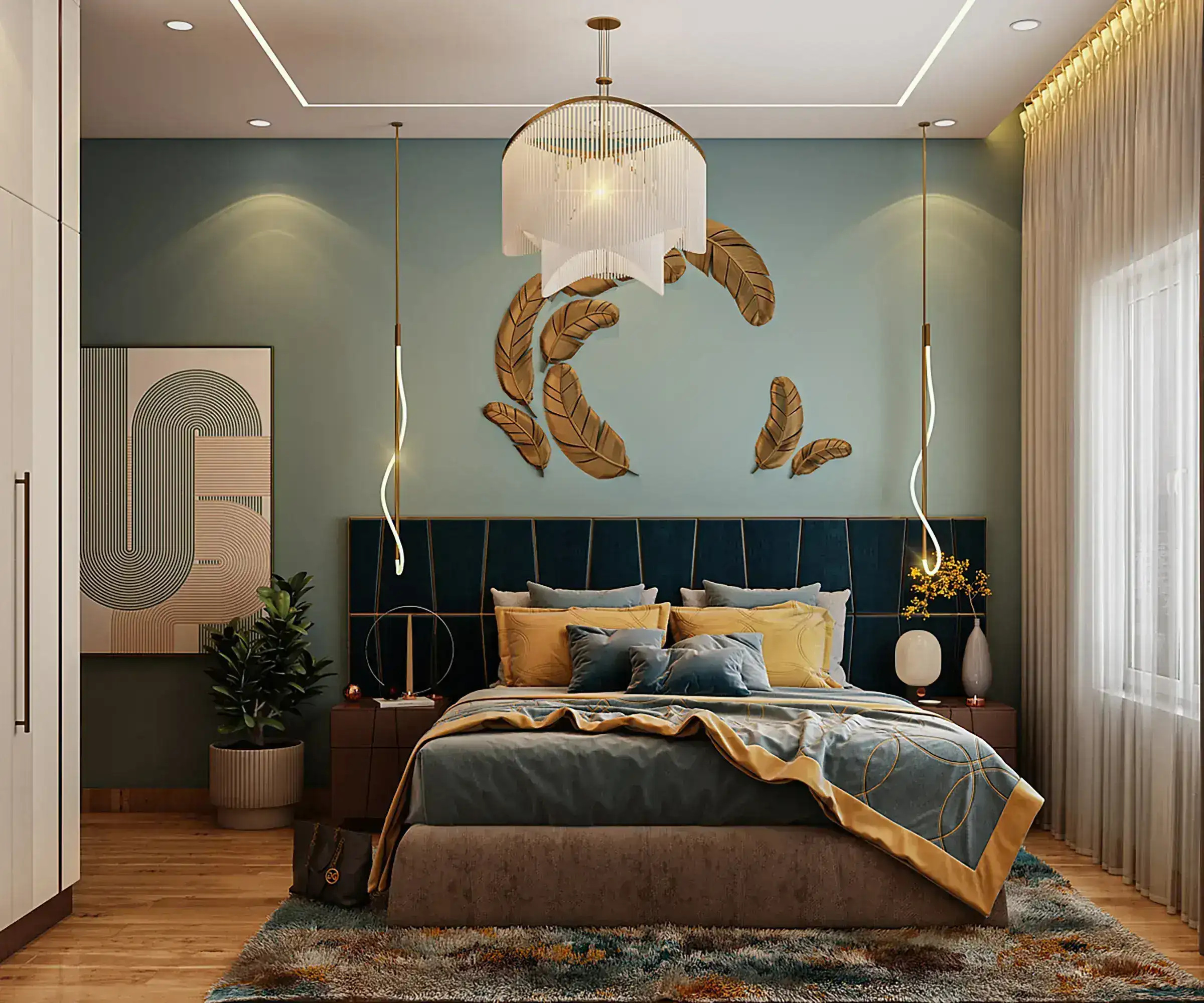
Sleep science and interior design have never had more to say to each other. We know more now than ever before about how the physical environment — light, temperature, sound, material texture, even ceiling height — affects the quality of rest. And yet most bedroom design in Indian homes prioritises aesthetics and storage capacity long before it considers the conditions that actually support sleep.
This piece is about fixing that. Here's how to design a master bedroom in Bangalore that's genuinely restful — not just a place where you put a bed.
Start With Light — The Most Underestimated Variable
The human sleep cycle is regulated largely by light. Specifically, by the colour temperature of the light we're exposed to in the hours before sleep — and the quality of light that wakes us in the morning. In a master bedroom, the goal is to give yourself full control over both.
Blackout capacity first
Bangalore's urban neighbourhoods — Indiranagar, Whitefield, Koramangala — have significant street light pollution. Standard curtains do nothing to address this. We recommend blackout lining behind any decorative curtain fabric. Floor-to-ceiling blackout curtains, properly installed to cover the full window width without gaps, transform sleep quality in city apartments.
Warm, dimmable lighting second
Remove the single ceiling light entirely — or at minimum, put it on a dimmer and use it only for cleaning the room. The bedside lamps and wall sconces you actually use at night should emit warm light (2700K or below) and be independently switchable from the bed. Reaching across a partner to turn off a lamp at 11pm is a design failure. Avoid blue-spectrum LED strips behind headboards as ambient lighting — they look striking in photos and are genuinely counterproductive for sleep.
Temperature and Airflow — Bangalore's Advantage
Bangalore's climate is a gift for sleep. Cooler evenings and nights, particularly from October through February, create naturally good sleeping conditions. The design goal is to preserve and extend that advantage.
Ceiling fan placement matters more than people realise. A fan should sit directly above the sleeping zone, not offset toward one side. In bedrooms wider than 14 feet, two fans or a fan-plus-AC combination gives better airflow distribution than one large unit. For AC placement, avoid positioning the outlet directly above the head of the bed — cold air blowing onto a sleeping face disrupts rest and causes dryness. Side-wall units or cassette ACs with adjustable louvres are better in most Indian bedroom configurations.
Sound — The Forgotten Variable
Urban Bangalore is a noisy city. Traffic, construction, and the general intensity of a growing metropolitan area mean that most apartments carry more ambient sound than their residents consciously register.
Soft furnishings absorb sound. A well-chosen rug, upholstered headboard, heavy curtains, and even a fabric-panelled accent wall all contribute to a quieter acoustic environment. Hard-surfaced bedrooms — all tile floors, painted walls, no soft furnishings — reflect sound and feel restless even when they're visually calm. Solid-core doors make a meaningful difference in sound isolation, particularly relevant if there's a living room TV wall or a child's room adjacent. This is a specification detail that costs relatively little and pays off every single night.
Material Choices That Promote Calm
Natural, breathable textiles where skin contact occurs. Cotton and linen bedding in neutral tones regulate body temperature better than synthetic alternatives — this matters more in Bangalore's pre-monsoon humidity.
Matte surfaces over glossy ones. Reflective surfaces in a bedroom — high-gloss wardrobes, mirror-finish furniture — create visual activity and reflect light in ways that subtly undermine calm. We use matte-finish wardrobes, limewash or matte-painted walls, and natural wood tones rather than lacquered white furniture in our bedroom projects.
Limit technology visibility. A bedroom with a visible TV stand, charging cables, and router lights signals work and stimulation. Concealing technology — routing cables into walls, installing shuttered TV panels, using covered charging points — is a design choice with real neurological impact.
Layout — The Bed as Anchor
The bed should be on the wall you see when you enter the room, centred on it if possible, with equal space on both sides. This is a convention for a reason — it creates visual stability and gives both occupants equivalent access.
In smaller bedrooms (under 130 sq ft), resist the urge to fill every wall. A room with breathing space is a room that allows rest. One well-designed wardrobe unit, one bedside table on each side, and a single accent chair or bench at the foot of the bed is often enough. The area below the bed is your most underused storage opportunity — platform beds with hydraulic storage lift mechanisms are one of the best space-efficiency investments in a Bangalore apartment.
A bedroom designed for sleep is a bedroom designed for health. It doesn't need to sacrifice beauty — in our experience, the calmest, most restful bedrooms are also often the most visually sophisticated.
Rest better. Starting with better design.
Book a free consultation with Skyline Spaces and let's redesign your bedroom from the foundations up — for both beauty and genuine rest.
Book a Free Consultation